As you look for lift kits and truck accessories in Reading, first decide whether a leveling option or complete suspension lift is right for you. A leveling kit corrects factory rake and maintains learn now daily handling, while a suspension lift system provides clearance, wheel travel, and larger tire fitment. Make sure you have exact year, trim, drivetrain, and suspension details to verify Rough Country compatibility. Plan your budget for tires, alignment, and add-ons including steps, lights, or liners—you'll see how the right setup takes shape.
Important Highlights
- Pick a leveling kit to correct factory rake while preserving near-stock performance and fitting slightly larger tires for daily commuting.
- Go with a suspension lift kit for better clearance, wheel travel, and performance off-road, understanding handling and steering may change.
- Check precise fitment with your truck's year, make, model, drivetrain, trim, cab, bed, and suspension package before buying Rough Country parts.
- Pair lift height and shock setup to your driving style, whether you're commuting, doing trail work, towing, or serious off-road travel.
- Budget for more than the kit price, including alignment, labor, wheels, tires, shocks, and supporting accessories like steps, lights, and liners.
Comparing Suspension Lift Kits and Leveling Kits
Although both upgrades alter your truck's profile, leveling kits and suspension lift kits solve distinct issues and produce varying outcomes. A leveling solution usually raises the front to align with the rear, fixing factory rake with little alteration to geometry, ride height, and daily drivability. You pick one when you desire a cleaner profile and space for bigger tires.
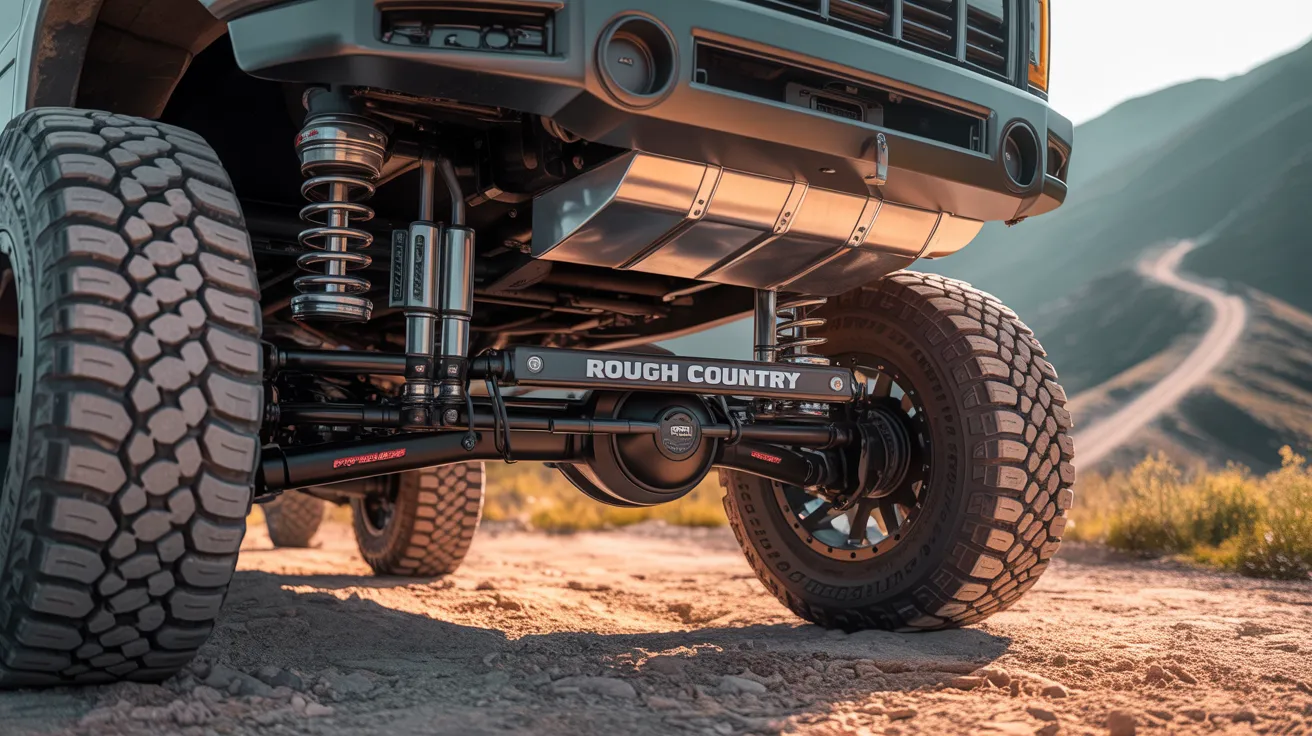
A suspension lift kit raises the entire truck and changes key components to deliver increased clearance and suspension movement. You'll see major gains in ride height, off-road performance, and tire choices, though you should plan for handling tradeoffs, steering changes, and a higher center of gravity. If you desire mild visual correction, level it. When you require real clearance and articulation, lift it and organize the supporting modifications tailored to your use case.
What Rough Country lift kit is ideal for your truck?
Begin by recording your truck's year, make, and model, transmission type, and intended use, because Rough Country manufactures lift kits for exact geometric requirements and capability objectives. This data reveals which structural components and hardware will attach properly without clearance or alignment issues.
Next, review original ride height, cab layout and bed setup, axle specification, and whether your truck features 2WD, 4WD, or adaptive suspension. Rough Country fitment documentation streamline this check, but you still need to verify model compatibility against trim-specific hardware and factory package variations. A kit that fits a Silverado 1500 may not fit a Trail Boss, and a Ram with air suspension demands different provisions than a vehicle with coil springs. When you confirm exact fitment first, you sidestep unexpected problems, compatibility issues, and returns.
Which Rough Country lift kit works with your driving habits?
Pair the kit to your driving patterns, and you'll achieve improved ride comfort, durability, and additional tire clearance without paying for capability you won't use. If you primarily commute in your truck, choose a simple Rough Country leveling kit or a 2- to 3.5-inch suspension setup designed for commuting comfort and consistent steering feel.
If you divide time between road and off-road use, go with a suspension lift that includes improved shocks and corrected arm angles. You'll gain better trail handling, better articulation, and space for bigger tires without straining stock components. For heavier trail use, select elevated struts, N3 or Vertex shock dampers, and setups that keep driveline angles correct under compression. The ideal Rough Country setup must match load capacity, speed, and terrain, and your tolerance for ride stiffness.
Top Rough Country Truck Accessories
Complete your lift setup with Rough Country accessories that solve the genuine problems you'll encounter after lifting and upgrading tires. Focus on upgraded entry steps or side sliders, that restore cabin access and deliver lower-body protection once your truck sits higher and wider.
focus
What's the Right Budget for Your Build?
Once you've picked the suspension kit and complementary parts, set a budget that covers more than the base kit cost. You'll need room for shocks, rims, rubber, alignment, installation labor, and any drivetrain or steering corrections your platform requires. Brand reputation matters here; high-end kits usually deliver more precise specifications, better ride quality, and smoother installation. higher precision, better ride quality, and fewer install headaches.
For realistic budget ranges, expect budget-friendly spacer or leveling kits to start lower, while complete suspension setups featuring control arms, tuned shocks, and oversized tires escalate rapidly. Installation complexity, labor charges, and alignment calibration can add significantly. You should also price supporting upgrades like gear changes, brake components, and recovery gear if you plan to use it off-road. If budget is a concern, compare financing options carefully and focus on reliability over showy accessories.
Common Questions Answered
Will Lift Kits Change My Factory Warranty?
Yes, lift kits can affect your factory warranty coverage, yet they don't automatically void it. You may face warranty implications if the dealer proves the lift kit triggered or contributed to a failure. Powertrain, steering, suspension, and drivetrain claims commonly cause dealer disagreements. You must maintain installation records, use quality components, and keep service intervals. That helps you dispute declined claims and preserve protection where the modification isn't responsible.
Do Larger Tires Require Re-Gearing My Truck?
Yes—should you leap multiple tire sizes, you'll typically need re-gearing. For instance, when switching from 31s to 35s, your truck may feel slow, hunt for gears, and build drivetrain stress when carrying weight. Re-gearing reestablishes optimized gear ratios, helping you restore acceleration, towing performance, and transmission behavior. You may skip it for modest tire increases, however, if performance, fuel mileage, or gear shifting decline, it's typically the best option.
What's the Inspection Schedule for Lift Kits?
You should inspect lift components after the first 500 miles, then each time you change oil or at 3,000 to 5,000 mile intervals, based on use. Regular maintenance checks help you spot bushing wear, shock leaks, bracket damage, and alignment issues early. Check Fastener torque after hard off-road runs, towing, or impacts. When you operate in muddy, salty, or challenging terrain regularly, shorten intervals and examine steering and suspension parts at faster intervals.
Can a lift kit modify towing or payload capacity?
Yes, a lift kit can alter your towing and payload capacity. When you raise ride height for more ground clearance, you change suspension angles, gravitational center, and leverage on components. That can reduce stability when carrying load and amplify drivetrain stress, especially with larger tires. You should obey your manufacturer's ratings unless an engineered kit specifically documents upgraded ratings. Good alignment, gearing options, and brake performance matter too.
Do alignment checks require attention after installing truck accessories?
Yes—if products shift ride height, suspension geometry, steering angles, or tire circumference, you need an alignment service. You'll feel the theory fast: minor tweaks can pull your truck off-center, reduce tread life, and affect handling response. A proper wheel alignment restores camber, caster, and toe to spec. After specific add-ons, you may also need brake adjustment for driver-assist accuracy. You protect tire life, steering precision, and practical safety by checking alignment immediately.
Summary
Determining the right suspension setup and accessories comes down to your truck's application, what stance you want, and your cost capacity. When you tune a Rough Country lift kit within your driving style, you'll experience performance, clearance, and looks that work together like a well-tuned drivetrain. Add wise upgrades, structure your spending carefully, and you'll build a truck that's practical on the road, formidable on trails, and equipped for anything next.